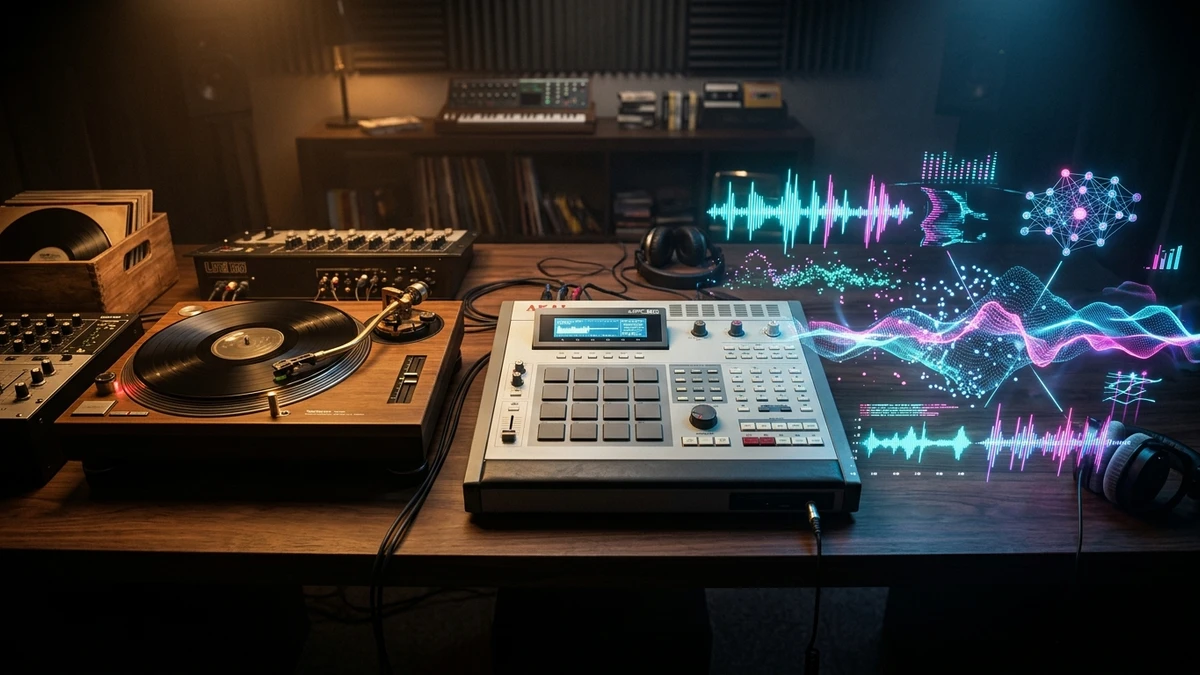
What is Audio Sampling? Sonic Collage vs. Plagiarism
In music theory and audio engineering, sampling is the reuse of a portion of a sound recording (a melody fragment, drum break, vocal hook, or ambient sound) as an instrument or building block in an entirely new composition.
While critics in the 1970s and 1980s initially dismissed sampling as unoriginal theft, history validated it as a radical form of musical recontextualization. When an inventive producer chops a two-second phrase from a 1960s jazz vinyl, pitches it into minor, filters the highs, and lays it across a gritty hip-hop groove, an entirely original artistic statement is born.
Sampling utilizes the actual copyrighted sound recording (master recording) of a previous release, requiring master and publishing clearance. Interpolation (replay) involves re-recording the underlying melody or chord progression with session musicians, bypassing the original master recording rights.
Early Foundations: Musique Concrète to the Mellotron
Audio sampling predates microprocessors and digital computers by several decades. In 1948, French radio engineer and composer Pierre Schaeffer founded Musique Concrète in Paris. Utilizing shellac disc cutters and later reel-to-reel magnetic tape, Schaeffer recorded environmental sounds (train whistles, spinning motors, drops of water), physically slicing tape with razor blades to construct the first hypnotic tape loops.
By 1963, the British-built Mellotron M400 arrived—an electro-mechanical keyboard housing 8-second tape strips beneath every key. Striking a key pulled the tape across an analog playback head, enabling musicians to perform polyphonic real orchestral recordings on keyboard keys. The Mellotron flutes in The Beatles’ "Strawberry Fields Forever" became an enduring symbol of early tape sampling.
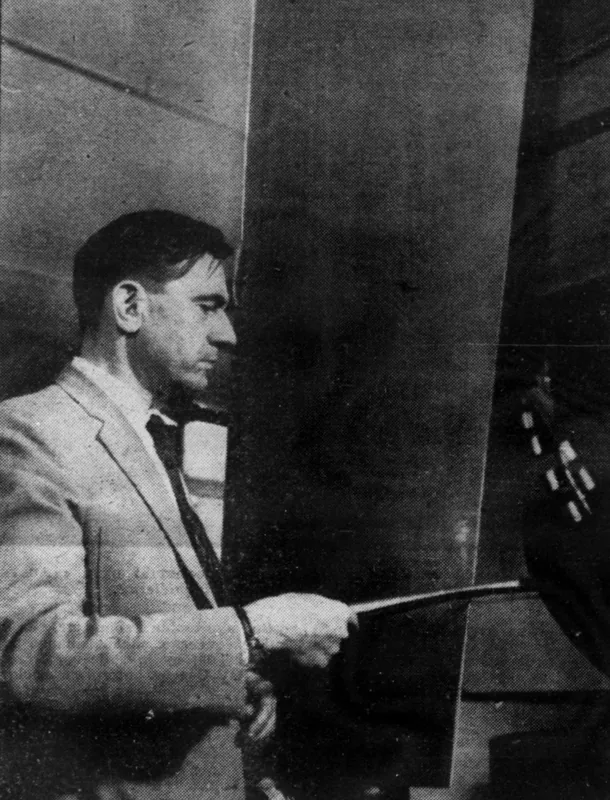
Father of Musique Concrète in Paris; the first composer to treat recorded real-world environmental tapes as raw musical material.
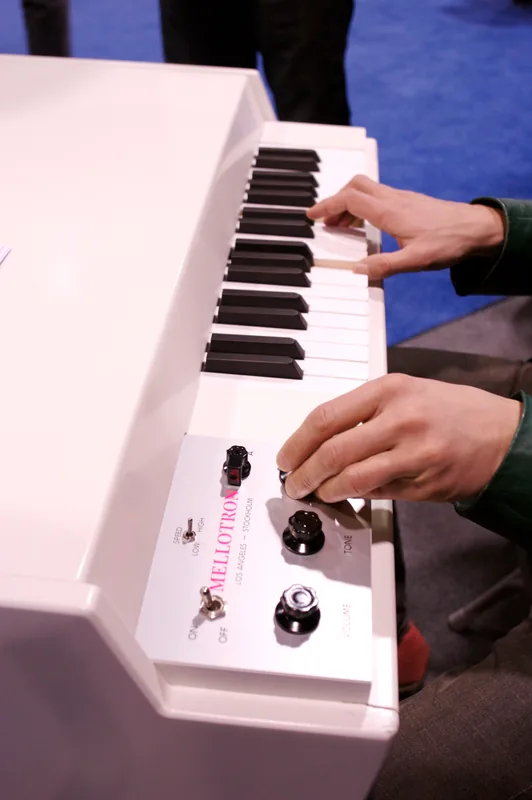
The legendary electro-mechanical tape replay keyboard; famously powering The Beatles’ iconic "Strawberry Fields Forever" opening flutes.
The Digital Revolution: Fairlight CMI & E-mu SP-1200 (1970s–1980s)
As microprocessor technology accelerated in the late 1970s, sampling graduated from spinning mechanical tape reels into digital binary code.
The Australian Fairlight CMI (1979) was the world’s first commercial digital sampling synthesizer, featuring a green CRT monitor and light pen for audio waveform manipulation. Its stratospheric price tag ($20,000 to $100,000) reserved it for elite icons like Peter Gabriel, Kate Bush, and Michael Jackson (the iconic breaking glass in "Beat It" was a Fairlight sample).
In 1987, E-mu Systems released the SP-1200. Operating at 12-bit resolution and a 26 kHz sample rate with a mere 2.5 seconds of total memory, the SP-1200’s warm analog SSM filters and aggressive crunch defined the Golden Age hip-hop sound of RZA, Pete Rock, and Marley Marl.
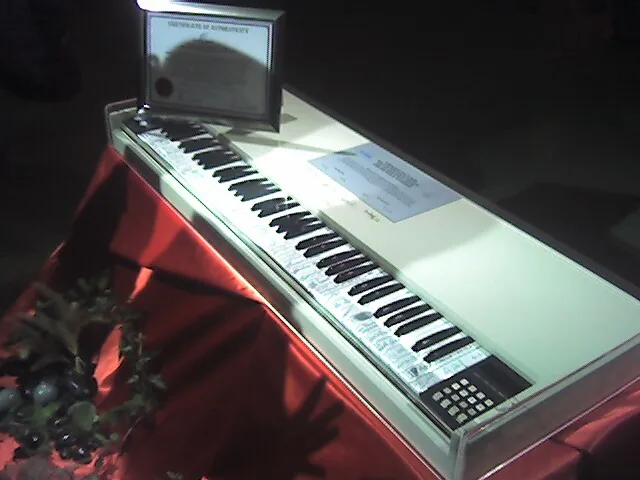
The world’s first commercial digital sampling workstation with green CRT monitor and light pen; utilized extensively on Michael Jackson’s Thriller.
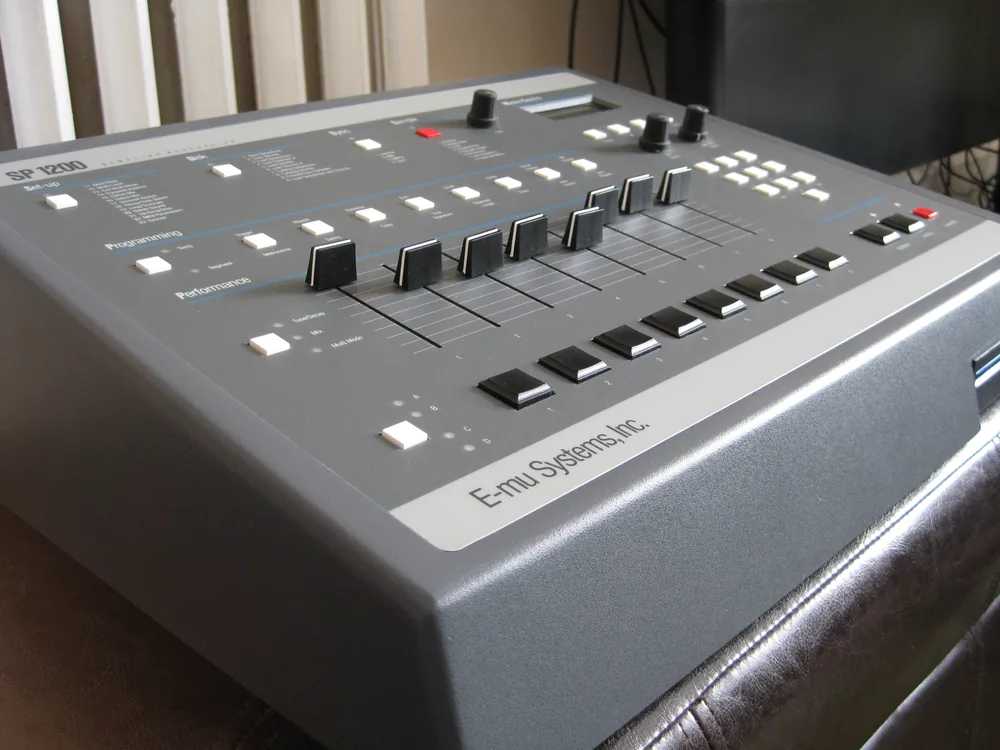
The legendary 12-bit drum machine and sampler whose raw crunch, analog SSM filters, and heavy punch defined Golden Age hip-hop.
Roger Linn & Akai MPC: Inventing Modern Hip-Hop Production
In 1988, visionary American engineer Roger Linn collaborated with Japanese manufacturer Akai to release the Akai MPC60 (Music Production Center), redefining popular music production overnight.
The MPC introduced the iconic 4x4 velocity-sensitive rubber pad grid, professional 16-bit / 44.1 kHz fidelity, and the proprietary MPC Swing algorithm. The intuitive timing engine allowed legends like J Dilla to disable quantize entirely, birthing the relaxed "drunk beats" aesthetic that powers modern lo-fi hip-hop.
Prior to 1985, samplers were used exclusively for vocal stabs or instruments. In his studio, Marley Marl accidentally sampled a snare hit from a vinyl record while attempting to sample a vocal, discovering he could trigger individual acoustic drums from keyboard keys. The resulting record, "The Bridge", ignited modern sample-based drum production.

Pioneer of the LinnDrum and architect of the Akai MPC series; inventor of the 4x4 velocity-sensitive drum pad grid and groove swing.
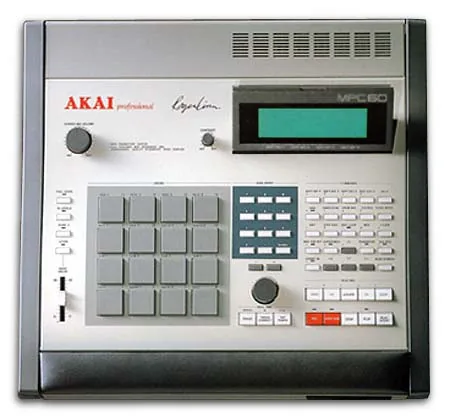
The definitive Music Production Center featuring 16 velocity pads and an intuitive 16-track sequencer that anchored hip-hop, R&B, and pop.
Pioneering DJ Culture & Landmark Copyright Rulings
Hip-hop DJ culture emerged in the 1970s with DJ Kool Herc in the Bronx. By placing two identical copies of a vinyl record on twin turntables and toggling the mixer crossfader, Herc extended the instrumental percussion break indefinitely—a technique dubbed the "Merry-Go-Round" that gave birth to breakdancing.
Sampling existed in legal ambiguity until 1991, when Gilbert O’Sullivan sued rapper Biz Markie over an uncleared piano loop from "Alone Again (Naturally)". In the historic Grand Upright Music v. Warner Bros. ruling, the federal judge cited the Ten Commandments: "Thou shalt not steal," decreeing that uncleared sampling constituted strict copyright infringement. This birthed the commercial sample clearance industry and pushed producers toward creative micro-chopping.
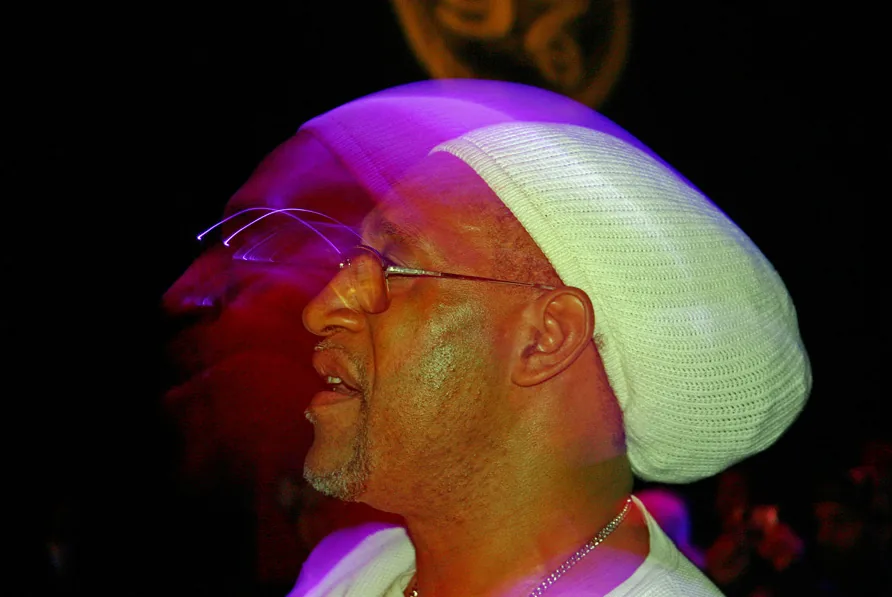
Pioneer of the Merry-Go-Round turntable technique in the Bronx (1973), looping vinyl drum breaks that laid the foundation of hip-hop.
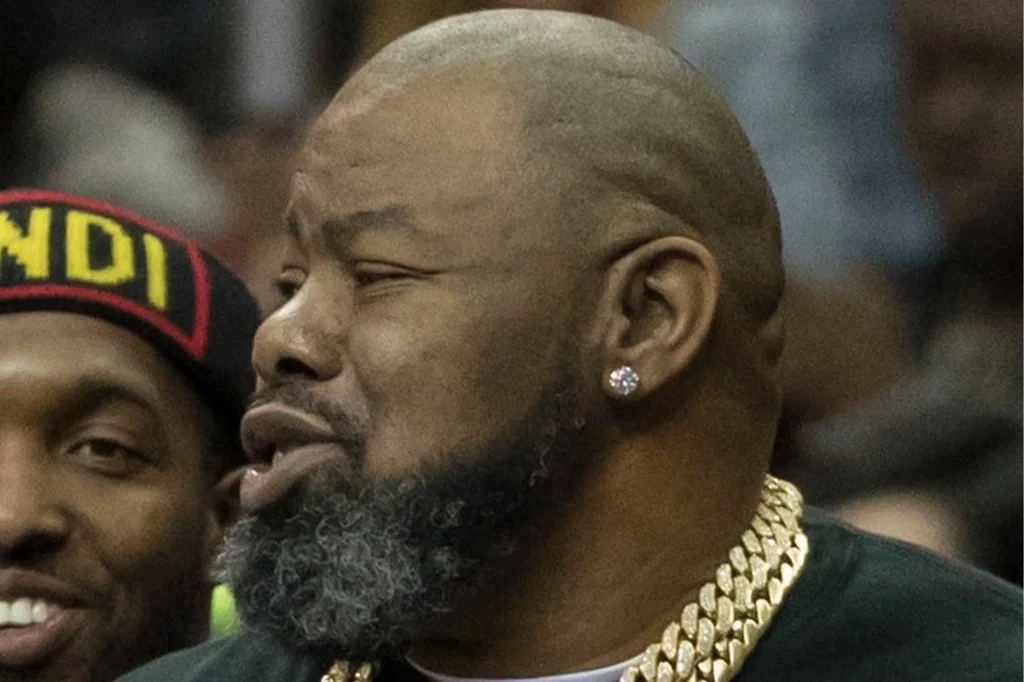
The beloved rap pioneer whose landmark copyright lawsuit permanently transformed music law and popularized micro-chopping.
The Software Era: Modern DAWs, Cloud Libraries & AI
Today, sampling capabilities are democratized within every major Digital Audio Workstation:
Automatic Chopping Plugins (FL Studio Slicex & Serato Sample): Instant transient detection places chops across MIDI controllers and piano rolls in milliseconds.
High-Fidelity Time-Stretching: Sophisticated algorithms stretch samples across tempos (e.g., 80 to 140 BPM) or shift musical keys without sonic degradation.
Cloud Sample Platforms (Splice & Tracklib): Instant access to millions of royalty-free one-shots and pre-cleared classic catalog recordings.
AI Stem Separation: Deep learning neural networks isolate vocals, drums, basslines, and melodies from mixed stereo masters with surgical accuracy.
Timeline of Audio Sampling Innovation (1948–Present)
A chronological overview of milestones, formats, and breakthrough records across sampling history:
| Device / Innovation | Year | Format / Resolution | Pioneering Artist / Milestone | Breakthrough Feature |
|---|---|---|---|---|
| Magnetic Tape | 1948 | Reel-to-Reel Analog | Pierre Schaeffer | First physical tape splices and manual audio loops |
| Mellotron M400 | 1963 | Analog 3/8" Tape | The Beatles / King Crimson | Orchestral audio tape replay playable from keyboard keys |
| Fairlight CMI | 1979 | 8-bit / 24 kHz | Peter Gabriel / Michael Jackson | First commercial digital sampler with CRT screen and light pen |
| E-mu SP-1200 | 1987 | 12-bit / 26 kHz | RZA / Marley Marl / Pete Rock | Crunchy 12-bit saturation and warm analog filtering |
| Akai MPC60 | 1988 | 16-bit / 44.1 kHz | Roger Linn / J Dilla / DJ Premier | 16 velocity-sensitive pads and signature MPC Swing timing |
| Akai S950 / S1000 | 1988 | 12 / 16-bit Rackmount | Fatboy Slim / Daft Punk | Timestretching algorithms powering Jungle & Electronic music |
| Kontakt & Modern DAWs | 2002 | 24/32-bit Floating Point | Global Modern Producers | Unlimited RAM-based sampling and virtual instruments |
Harmonic Alignment: Layering Original Chords over Samples with MojoMelody
A frequent barrier producers encounter is harmonic clashing: finding a soulful vintage sample loop, but discovering newly added basslines or synth pads sound dissonant or off-key.
Vintage vinyl samples are often detuned away from standard 440 Hz concert pitch or grounded in modal scales (such as Dorian, Phrygian, or microtonal modes).
How MojoMelody Solves the Harmonic Clashing Problem: Identify the root key of your chopped sample, lock your scale inside MojoMelody, and out-of-scale keys are eliminated. Producers can build inverted chord progressions and complementary basslines utilizing Smart Voice Leading, dragging completed MIDI directly onto instrument tracks in FL Studio, Ableton Live, Cubase, or Logic Pro with zero harmonic dissonance.
Frequently Asked Questions
Q:Is there a legal rule allowing sampling under 3 or 7 seconds?
No. This is a persistent and costly music production myth. Under international copyright law, sampling even half a second of a copyrighted master recording without permission constitutes infringement, unless acquired via royalty-free licensing or fair use doctrine.
Q:What is the difference between Bit Depth and Sample Rate in vintage samplers?
Bit depth (e.g., 12-bit vs. 16-bit) governs dynamic range and quantization noise, with lower bit depths imparting raw crunch and grit. Sample rate (e.g., 26 kHz vs. 44.1 kHz) determines maximum audio frequency bandwidth (Nyquist frequency).
Q:Why do vintage hardware samplers like the Akai S950 or MPC60 sound warmer than modern computers?
The warmth stems from early analog-to-digital converters (ADCs), nonlinear input preamps that gently saturate incoming audio, and analog output reconstruction filters.
Q:How do producers properly synchronize a vinyl sample with project tempo in a DAW?
Truncate the sample cleanly to an exact musical interval (e.g., exactly 4 or 8 bars). Enable transient-preserving timestretching (such as Pro Default in FL Studio or Complex Pro in Ableton) and snap to project tempo.
Q:How has AI stem separation transformed the sampling landscape?
Deep learning source separation models allow producers to isolate vocals, drums, bass, and melodic instruments from vintage stereo recordings with astonishing precision, unlocking previously inaccessible audio material.